“FemTech” refers to an emerging category of technologies designed to support women’s health. The term was coined in 2016 by entrepreneur Ida Tin, founder of the menstrual tracking app Clue. Over the past decade, FemTech has gained increasing attention among healthcare practitioners, researchers, entrepreneurs, policymakers, and everyday users. Today, it represents a dynamic frontier of innovation, encompassing wearable devices, medical diagnostics, reproductive health technologies, digital health platforms, and, increasingly, tools enabled by artificial intelligence (AI).
The FemTech market has rapidly evolved into a significant segment of the broader digital health industry, with strong growth projections over the coming years. According to Statista, the global market was valued at approximately 52 billion dollars in 2023 and is expected to exceed 117 billion by 2029, reflecting a compound annual growth rate of around 14.6%. More recent estimates indicate that the sector reached nearly 60 billion in 2024, underscoring its accelerating expansion and increasing investor attention. Additional market analyses point to similarly robust trajectories, with projections suggesting the market could grow from roughly 39 billion in 2024 to over 97 billion by 2030, driven by the adoption of digital health solutions, wearable technologies, and AI-enabled platforms. Taken together, these figures highlight how FemTech is transitioning from a niche innovation space into a large-scale, high-growth industry with global relevance.
The systemic neglect of women’s health
For decades, many conditions affecting women—from endometriosis to hormonal disorders—were under-researched or diagnosed late. These gaps reflect longstanding systemic challenges in medical research, clinical practice, and data availability. Historically, medical studies and clinical trials tended to rely disproportionately on male participants, leaving significant gaps in knowledge about women’s health conditions and treatment responses.
Social and cultural factors have also played a role. Symptoms commonly reported by women—such as chronic pelvic pain, fatigue, or hormonal changes—were in many cases underestimated or even overlooked. Limited research funding and fragmented health data specific to women’s health slowed progress.
Research shows that women historically represented less than 35% of participants in clinical trials, resulting in significant knowledge gaps about women-specific conditions and treatment responses. Additionally, only 1–2% of global healthtech funding is directed toward FemTech, reflecting a persistent underinvestment relative to market potential. In 2025 the market raised $615.9 million across 35 deals, highlighting a year of consolidation centered on fertility and reproductive health. Over the past four years, global FemTech funding has totaled nearly 2.4 billion across 147 equity rounds, with fertility consistently capturing the largest share of capital. Even celebrity investors increasingly backed femtech in 2024-2025, with Amy Schumer, Serena Williams, Tory Burch, and Emma Watson all participating in women’s health rounds.
The rise of FemTech
Over the last decade, new technologies are beginning to address these limitations. At the same time, the rapid accumulation of data—from medical imaging and genomic information to signals generated by wearable devices and health apps—has created new opportunities for innovation in women’s healthcare.
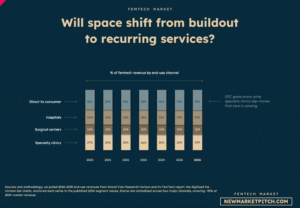
Today, FemTech’s use cases span a broad spectrum, ranging from advanced research in hospitals and scientific institutions to tools used by individuals in everyday life. Together, these technologies are reshaping women’s health in several ways—from improving specialized diagnosis and treatment to enabling individuals to more effectively understand and manage well-being.
Earlier detection and diagnosis
For healthcare organizations such as hospitals and research institutes, digital technologies—including AI-driven analytics—can contribute to earlier detection and diagnosis of disease. Advanced systems can analyze medical images, laboratory results, and clinical records to identify patterns that may indicate conditions such as breast cancer, cervical cancer, or ovarian abnormalities. By assisting physicians in interpreting medical data, these technologies can help detect diseases earlier and support more accurate diagnoses.
FemTech is also supporting a shift toward more personalized healthcare. By combining data from wearable devices, electronic health records, genetic information, and lifestyle factors, digital health platforms can help clinicians more effectively and accurately understand individuals’ health risks and treatments. This approach supports more tailored care—rather than one-size-fits-all solutions—in areas such as fertility management, pregnancy monitoring, hormonal disorders, and menopause.
Another important development is the improvement and enhancement of health awareness outside clinical settings. Smartphone apps and wearable devices such as smartwatches can track indicators such as sleep quality, heart rate, activity levels, and menstrual cycles. Data analytics can identify patterns or potential concerns, helping individuals become more aware of changes in health. This shift toward continuous monitoring complements traditional medical care by motivating a more proactive approach to wellbeing.
FemTech in everyday life
What can everyone do in everyday lives? Increasingly, women can leverage a growing list of FemTech tools. Menstrual tracking apps such as Flo (around 70 million monthly active users worldwide) or Clue (over 10 million monthly active users globally) allow users to record menstrual cycle information and symptoms, helping identify hormonal patterns over time. Wearable devices such as smartwatches can monitor sleep, heart rate, and physical activity, providing insights into stress, recovery, and lifestyle habits. Digital health platforms also allow users to organize health data, track symptoms, and store medical records. Usage is particularly strong among younger demographics: in the United Kingdom, for example, 56% of young people report using women’s health platforms on a monthly basis, signaling a shift toward routine, data-driven health monitoring.
By regularly using these tools, women can build a clearer picture of their health and bring more detailed information to conversations with healthcare providers. In this sense, FemTech represents not only technological innovation but also a broader shift toward more informed, proactive, and personalized approach to women’s healthcare.
Beyond technology
Healthcare is, by nature, human-centered. Technology is a powerful tool, but it is only part of the solution. Improving women’s health requires progress beyond technology alone. Society must cultivate greater awareness and empathy toward women’s health issues, along with improved communication and understanding across the entire community—among both women and men. At the same time, there is a need for more training and education for healthcare practitioners, both male and female, as well as a greater number of female doctors, researchers, and healthcare professionals.
The FemTech sector faces significant challenges, particularly around data privacy and security. Many health apps collect highly sensitive personal information—including menstrual cycles, fertility data, and reproductive health metrics—often sharing it with third parties or storing it on cloud platforms with varying security standards. Recent research highlights that vulnerabilities in mobile health apps are widespread, with many platforms lacking robust encryption or clear data-use policies.
Such gaps pose both ethical and regulatory concerns, as users may be unaware of how their health information is being used. Additionally, the sector must navigate uneven regulatory frameworks, particularly across different countries, which can slow adoption and limit trust among users. These challenges underscore that while FemTech offers transformative potential, ensuring privacy, security, and regulatory compliance remains critical for sustainable growth.
A shared responsibility
As Florence Nightingale, the founder of modern nursing and a pioneer in the use of data in healthcare, once said,
“To understand God’s thoughts we must study statistics.”
Today, digital technologies including FemTech offer new ways to understand health through data—an opportunity to improve women’s health more systematically and equitably.
Realizing this opportunity will require not only technological innovation but also continued commitment from researchers, clinicians, policymakers, and society as a whole. Making this happen is a responsibility we all share.
***
Alley Oop’s newsletter
Alley Oop arrives in your inbox every Friday morning with news and stories. To sign up, click here.
If you want to write to or contact Alley Oop’s editorial team, email us at alleyoop@ilsole24ore.com.
